
Pickleball Terminology: The Ultimate Glossary of Slang & Terms
Mastering pickleball terminology is the fastest way to feel confident on the court from day one.
You’ve got the paddle. You’ve got the comfortable shoes. You’ve even found a local court within five miles of your house. You feel ready to play, right?
But then you step onto the court, and suddenly, everyone is speaking a different language.
Someone yells, “Stay out of the kitchen!” Another player celebrates a “Nasty Nelson.” And you’re left standing there wondering if you accidentally joined a cooking class or a wrestling match instead of a friendly game of pickleball.
Don’t worry—you aren’t alone. Pickleball has a quirky, unique vocabulary that can be totally baffling for beginners. It’s a mix of tennis terms, badminton rules, and some downright weird slang that seems to have appeared out of nowhere.
If you want to feel confident on the court, you need to talk the talk. We aren’t just going to give you dry dictionary definitions here. We are going to decode the secret language of pickleball so you can stop scratching your head and start playing with confidence.
Here is everything you need to know, from the essential rules to the slang that makes you sound like a pro.
The Essentials (Terms You MUST Know)
This pickleball terminology guide starts with the terms that directly affect the rules and scoring.
Before we get to the fun slang, we need to cover the basics. These are the terms that affect the rules, the scoring, and the fundamental strategy of the game. If you don’t know these, you might lose a point without even realizing why.
The Kitchen (Non-Volley Zone)
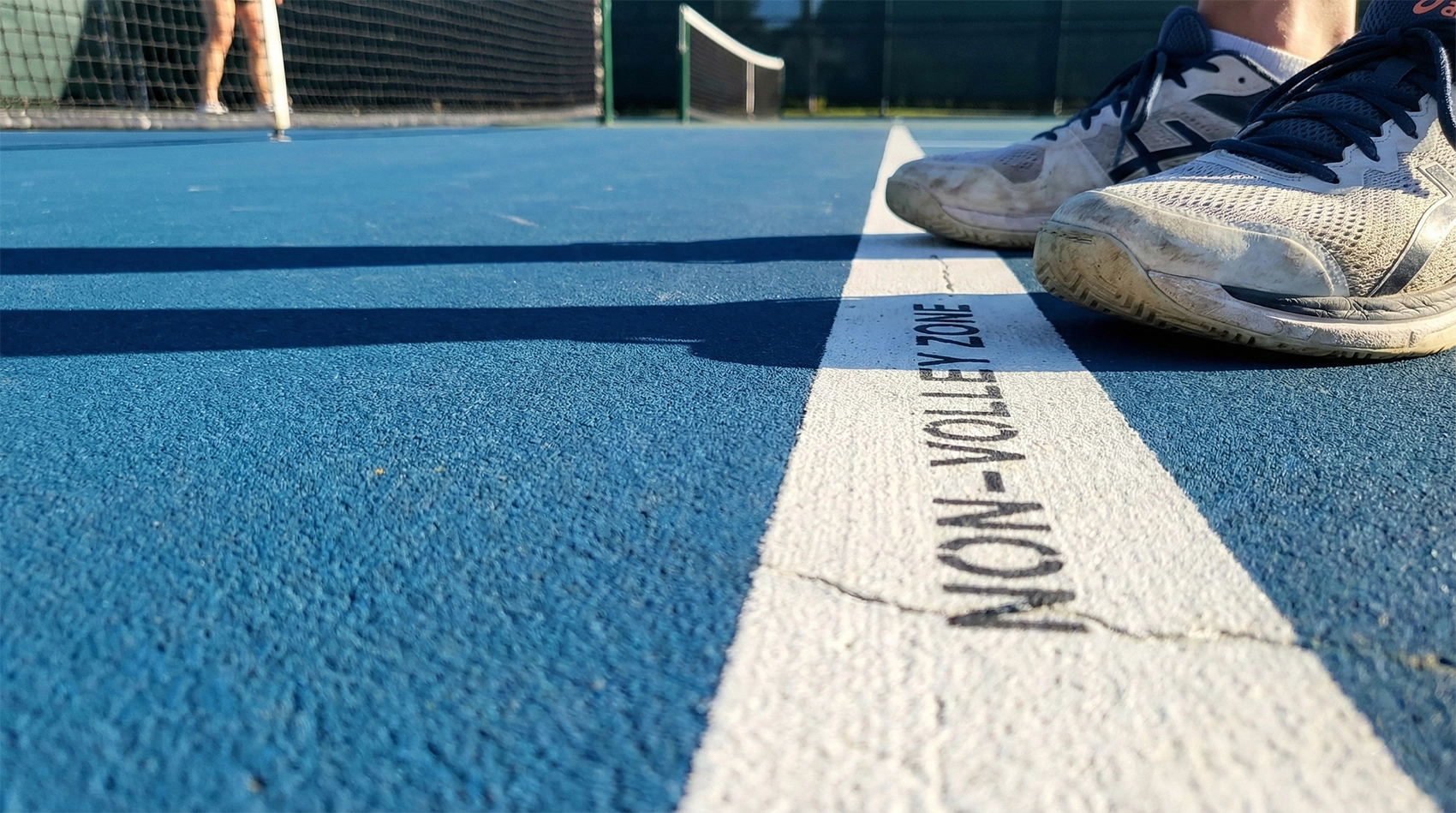
The “Kitchen” isn’t just a funny name; it’s the most strategic 7 feet on the court. Officially known as the Non-Volley Zone (NVZ), this is the area stretching 7 feet from the net on both sides.
Here is the golden rule: You can step inside it anytime you want, but you absolutely cannot volley (hit the ball out of the air) while standing there. If your toe even touches the Kitchen line while you hit a volley, it’s a fault, and you lose the point.
Dink
If you come from a tennis background, this shot might feel counterintuitive. You are used to smashing the ball, right? In pickleball, power isn’t always the answer.
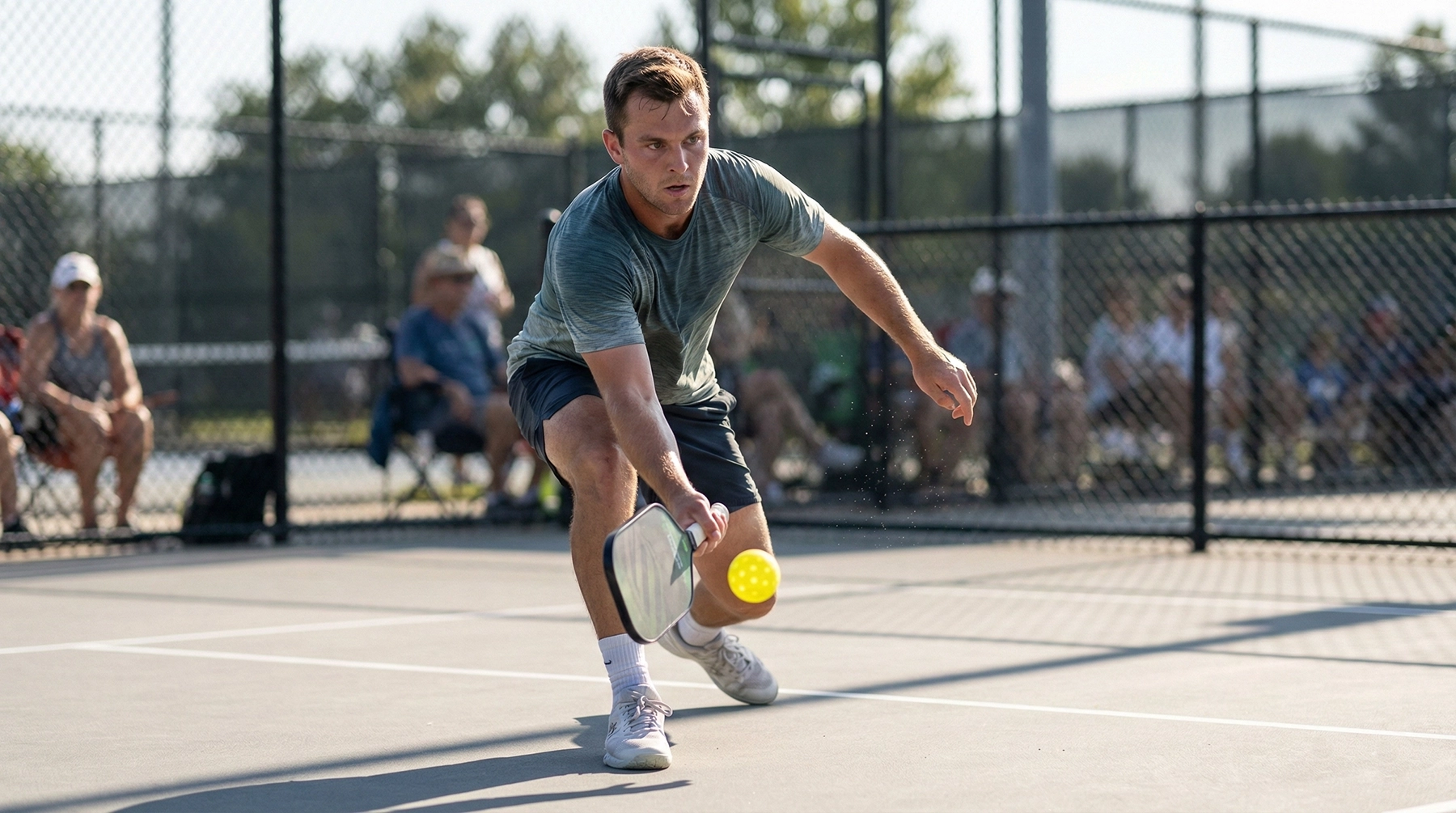
A dink is a soft, controlled shot that arcs over the net and lands harmlessly in your opponent’s Kitchen. The goal isn’t to hit a winner; it’s to force your opponent to hit the ball up. It’s a game of patience. You dink, they dink, you dink… until someone makes a mistake.
Volley
This one is simple but crucial. A volley is hitting the ball out of the air before it bounces on the ground. Most of your game should be spent trying to get to the Kitchen line so you can volley. If you are stuck at the back of the court letting everything bounce, you are playing defense. Get up there and volley!
Side Out
Pickleball scoring can be confusing (we know, saying “4-3-2” sounds like a math problem), but “Side Out” is a key concept to grasp.
A Side Out happens when the serving team loses the rally. In doubles play, each player on a team usually gets a chance to serve. Once both players have lost their serve, a “Side Out” is called, and the serve moves to the other team.
[Confusion Alert: Struggling with the numbers? Read our simple guide: Pickleball Scoring Explained]
Ace
An ace is a serve that is so good, the receiver doesn’t even touch it. Let’s be real: hitting an ace in pickleball is harder than in tennis because you are serving underhand. But it happens!
For the complete official rules and terminology, visit [USA Pickleball]
The Fun Slang (Sound Like a Pro)
Now that we covered the rules, let’s dive into the fun side of pickleball terminology – the slang. Using these terms correctly will make you fit right in at your local open play session.
Banger: We all know a banger. Usually, this is a former tennis player who steps onto the pickleball court and tries to hit every single ball as hard as humanly possible. They don’t want to dink; they want to drive the ball through you.
Pickled: This is the term you never want applied to you. Getting pickled means losing a game 11-0. It is the ultimate shame. If you get pickled, you might owe your partner a drink!
Nasty Nelson: A controversial, hilarious shot where the server intentionally hits the receiver’s partner (who is standing near the Kitchen) with the ball. It counts as a point for the server!
Erne: An advanced shot where a player jumps over the corner of the Kitchen (out of bounds) to smash the ball mid-air.
Bert: If the Erne had a crazy brother, it would be Bert. It’s essentially an Erne, but performed by your partner jumping in front of you.
Advanced Pickleball Terminology Level Up Your Vocabulary
Once you’ve mastered the basics, these terms will take your court conversation to the next level.
Third Shot Drop The most important shot in competitive pickleball. After the serve (shot 1) and the return (shot 2), the serving team’s third shot should ideally be a soft drop into the opponent’s Kitchen not a hard drive. This neutralizes the receiving team’s Kitchen advantage and allows the serving team to move forward safely. Mastering the third shot drop is the defining transition from beginner to intermediate player.
ATP (Around the Post) A legal and spectacular shot where you hit the ball around the net post instead of over it. When an opponent hits a wide angled shot that pulls you off the court, instead of trying to loft the ball back over the net, you run outside the court boundaries and hit the ball around the post at a low trajectory. No height requirement applies the ball doesn’t need to clear the net at all.
Poach In doubles, a poach is when you cross into your partner’s side of the court to intercept and attack a ball. Done correctly, it’s an aggressive winning play. Done incorrectly, it leaves your entire side wide open. Communicate with your partner before poaching a surprise poach can be just as damaging to your own team as to your opponents.
Reset When you or your team is under pressure and in a defensive position, a reset is a soft shot usually a dink designed to slow the rally down and neutralize your opponent’s attack. Instead of trying to hit a winner from a difficult position, you reset the point to a neutral dinking exchange. Knowing when to reset instead of attack is one of the most underrated skills in pickleball.
Lob A high arching shot hit deep toward your opponent’s baseline, designed to push them away from the Kitchen line. A well-executed lob forces your opponent to retreat, giving you and your partner time to move forward. A poorly executed lob sits up and invites a devastating overhead smash in return.
Speed Up The opposite of a dink. A speed up is when you suddenly accelerate the ball out of a slow dinking exchange to attack your opponent. Timing and disguise are everything — a telegraphed speed up is easy to handle, but a well-disguised one at your opponent’s shoulder is nearly impossible to defend.
Stacking An advanced doubles positioning strategy where both partners line up on the same side of the court before the serve, then quickly reposition after the ball is struck. Stacking keeps stronger players in their preferred forehand positions regardless of the serving rotation. You’ll see stacking used regularly in professional doubles matches.
Hindrance When something outside of normal play interferes with a rally a ball rolling onto the court from an adjacent game, a loud distraction, or a player inadvertently impeding their opponent’s movement. Either player can call a hindrance to stop play and replay the point.
Let In most sports, a let serve (hitting the net on serve) results in a re-serve. In pickleball, there are no let serves. If your serve clips the net and still lands in the correct service box, the ball is live and play continues. This surprises almost every player coming from a tennis background.
Chainsaw Serve (Now Banned) A serve technique where the player spun the ball against their paddle before releasing it, generating extreme topspin. It became controversial at professional levels due to its near-unreturnability. USA Pickleball officially banned the chainsaw serve in 2023. Serves must now be struck from a stationary toss or dropped ball no pre-spinning allowed.
Pickleball Terminology by Category Quick Reference
Court Terms:
- Kitchen / NVZ 7-foot no-volley zone near the net
- Baseline back line of the court
- Centerline divides the two service boxes
- Service box the diagonal target area for serves
Shot Terms:
- Dink soft shot landing in the Kitchen
- Drive hard, flat groundstroke
- Drop soft shot landing in the Kitchen from mid-court or baseline
- Lob high arching shot to the baseline
- Volley hitting the ball out of the air
- Overhead / Smash aggressive downward shot from above head height
Scoring Terms:
- Side Out serve changes to the other team
- Pickled losing 11-0
- Ace serve winner the receiver doesn’t touch
- Fault any rules violation ending the rally
Strategy Terms:
- Stacking advanced doubles positioning
- Poach crossing to intercept partner’s ball
- Reset soft defensive shot to neutralize pressure
- Speed Up sudden acceleration from a dink exchange
- Banger player who hits everything hard
Why is it Called “Pickleball”? (The History)
This is the most common question new players ask. Why “pickle”? Does it involve actual pickles? The history of the name is actually a subject of great debate, and there are two main stories.
The year was 1965. The place was Bainbridge Island, Washington. Three dads Joel Pritchard, Bill Bell, and Barney McCallum invented the game to entertain their bored kids.
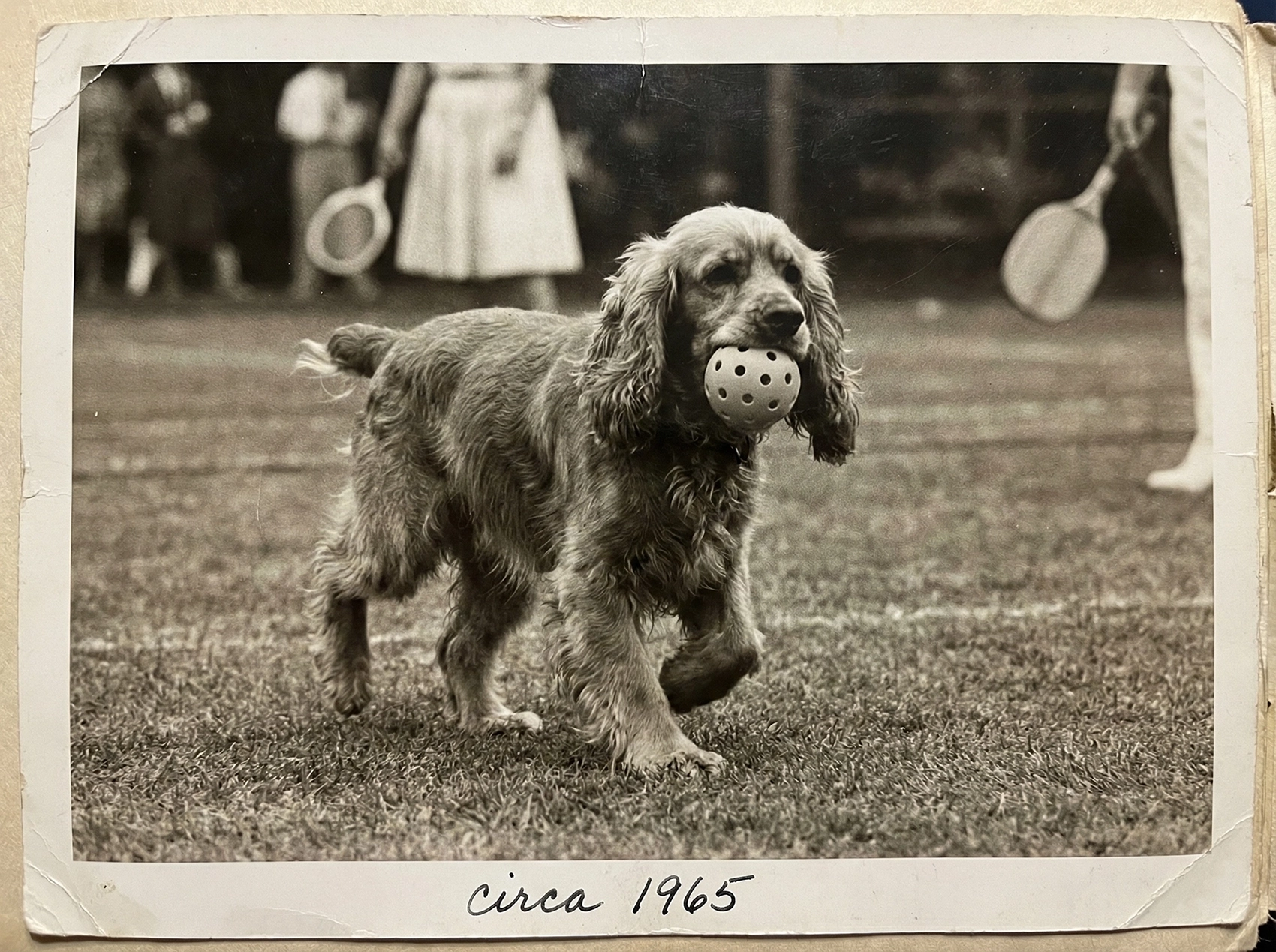
“Did the dog name the game, or did the game name the dog?”
The Dog Myth
For years, people believed the game was named after the Pritchard family dog, a cocker spaniel named Pickles. The story went that the dog would chase the ball and run off with it. “Pickles’ ball” became “Pickleball.” It’s a cute story, but sadly, it’s not true. Pickles the dog didn’t join the family until 1967 two years after the game was named!
The Rowing Truth
The real story comes from Joel Pritchard’s wife, Joan, a competitive rower. In rowing, a “pickle boat” is a boat manned by leftover oarsmen who weren’t selected for the top crews. It’s a mishmash crew. Since pickleball was a mishmash of tennis, badminton, and ping pong, she called it “Pickleball.”
Pickleball Terminology: Now You Speak the Language
You are now fluent in pickleball terminology – kitchen, dink, banger, and everything in between. A great player needs a great paddle. Don’t buy a cheap wooden one!
[Check out our guide: Best Pickleball Paddles for Beginners & Pros]
FAQ – Pickleball Terminology
Q: What is the most important pickleball term for beginners to learn first? A: The Kitchen. Understanding that you cannot volley from the Non-Volley Zone is the single most important rule in pickleball. Every other term builds on this foundation.
Q: What does “pickled” mean in pickleball? A: Getting pickled means losing a game 11-0. It’s the ultimate shutout. The term comes from the sport’s name itself you’ve been completely dominated without scoring a single point.
Q: What is a dink in pickleball? A: A dink is a soft, controlled shot hit from near the Kitchen line that arcs just over the net and lands in the opponent’s Kitchen. It’s the foundation of advanced play patience and placement beat power at every level.
Q: What does “side out” mean? A: Side out means the serving team has lost both of their serves and the ball transfers to the opposing team. In doubles, each player gets one serve per rotation before a side out occurs.
Q: Is the Erne legal in pickleball? A: Yes the Erne is completely legal. You jump around (not over) the Kitchen corner, land outside the court boundaries, and volley the ball. It’s one of the most spectacular legal shots in the sport.
Q: What is the difference between a drop and a dink? A: Both are soft shots aimed at the Kitchen, but they’re hit from different positions. A dink is hit from the Kitchen line during a rally. A drop (specifically the third shot drop) is hit from mid-court or the baseline to initiate your approach to the net.
Q: Why can’t you serve with a chainsaw serve anymore? A: USA Pickleball banned the chainsaw serve in 2023 because the pre-spun ball generated extreme topspin that made it nearly unreturnable at competitive levels. All serves must now be struck from a stationary toss or dropped ball with no pre-spinning.