
Top 3 Picks for Every Player
Search “best pickleball paddles” and you’ll drown in sponsored posts and review sites that somehow love every single paddle.
We cut through the noise. After researching dozens of paddles, we selected one best paddle for each type of player, beginner, control player, and power hitter.
No filler, no confusion.
2026 Top Paddles, At a Glance
| Paddle | Best For | Weight | Face | Score | Price |
|---|---|---|---|---|---|
| PCKL Launch Series🏆 Beginners | Beginners | 7.9 oz | Fiberglass | 9.2 | ~$60 |
| JOOLA Hyperion CFS🎯 Control | Intermediate+ | 8.4 oz | Carbon CFS | 9.6 | ~$160 |
| Selkirk Power Air Invikta💪 Power | Power Players | 7.8–8.2 oz | QuadFlex Hybrid | 9.1 | ~$180 |
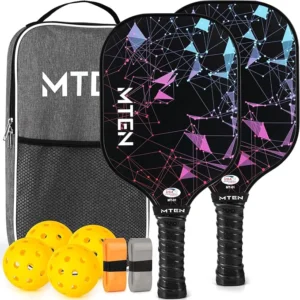
The PCKL Launch Series is the best entry point into real pickleball, no compromise.
The fiberglass face creates a generous sweet spot that forgives off-center hits, which is exactly what beginners need while developing consistent form.
At 7.9 oz, it sits perfectly in the mid-weight range: light enough for quick net exchanges, heavy enough to drive the ball deep without swinging hard.
The 13mm polypropylene core dampens vibration, so your arm stays comfortable even after long sessions.
If you’re just starting out and want a paddle that will carry you through your entire first year without holding you back, this is the one.
- ✅ Fiberglass face, huge sweet spot
- ✅ 7.9 oz mid-weight, arm friendly
- ✅ 13mm polymer core, excellent forgiveness
- ✅ USAPA approved, tournament legal
- ✅ Best price-to-performance ratio
- ❌ Not ideal for power-heavy play styles
- ❌ Less spin than carbon fiber paddles
- ❌ You will outgrow it as you improve
The PCKL Launch Series is the smartest first paddle purchase you can make. It removes every obstacle between you and enjoying pickleball from day one.
How We Selected the Best Pickleball Paddles for 2026
Not every paddle review site actually researches paddles thoroughly. We do. Our selection process for the best pickleball paddles 2026 draws on three sources of evidence rather than a single opinion.
Spec Verification
Every paddle in this guide is checked against manufacturer specifications, the official USA Pickleball approved equipment list, and independent lab data where it exists, covering weight range, core thickness, face material, and USAPA status.
Player Feedback Analysis
We compile and cross-reference verified owner reviews at scale across major retailers, weighing consistency in what players actually report about kitchen play, drive power, spin generation, and reset stability, not just the star rating on top.
Durability Track Record
We research real-world durability reports from player communities and long-term owner reviews, focused specifically on surface texture wear and grip compression complaints over months of regular play, since a paddle that impresses in week one but degrades by week four is not a recommendation we will make.
Our scoring system weights control and consistency most heavily, because a paddle that generates impressive spin on fresh strings but degrades within a month is not a recommendation we will make.
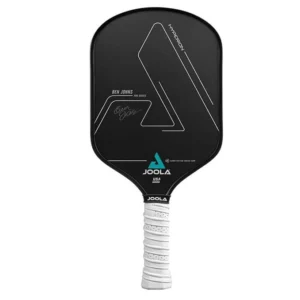
This is the paddle Ben Johns, the world’s #1 ranked pickleball player, uses in actual competition.
That Carbon Friction Surface (CFS) is not marketing language; it is a textured carbon fiber face engineered to grip the ball and generate elite-level spin on every shot.
The 16mm core is thicker than most paddles on the market, giving you exceptional touch and feel around the kitchen line.
Dinks, drops, and resets feel precise and controlled, you know exactly where the ball is going before it leaves the paddle.
If you have developed your fundamentals and want to unlock the next level of your game, the Hyperion CFS is the clearest upgrade you can make.
- ✅ CFS carbon face, elite spin generation
- ✅ 16mm core, superior kitchen control
- ✅ Ben Johns' actual competition paddle
- ✅ Exceptional dinking and reset feel
- ✅ Grows with you into advanced play
- ❌ ~$160, premium investment
- ❌ Beginners won't fully utilize its potential
- ❌ Spin capabilities need proper technique
The Hyperion CFS is the best spin-and-control paddle under $200. If you are serious about improving your game, this is the paddle that will take you there.
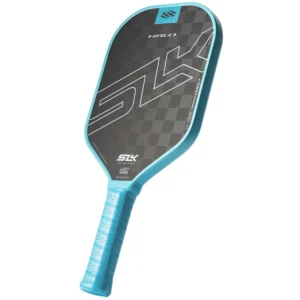
The Selkirk Power Air Invikta is built for one purpose: generating serious ball speed.
The elongated Invikta shape gives you extra reach and leverage on groundstrokes, and the Air Dynamic Throat design reduces air resistance so the paddle moves faster through the swing.
The QuadFlex face is where the magic happens, it combines the forgiveness of fiberglass with the spin potential of carbon fiber.
On drives and serves, the ball comes off this paddle with a velocity that catches opponents off-guard.
If your game is built around aggressive baseline play, powerful drives, and singles strategy, the Power Air Invikta turns your strengths into weapons.
- ✅ Elongated shape, extra reach and leverage
- ✅ Air Dynamic Throat, faster swing speed
- ✅ QuadFlex face, power + forgiveness combo
- ✅ Assembled in USA, premium build quality
- ✅ Dominant in singles and aggressive doubles
- ❌ Soft game (dinking) requires adjustment
- ❌ One of the louder paddles on the market
- ❌ Edgeless design, less edge protection
The Power Air Invikta is the top choice for players who want to dominate with power and reach. If your game is about winners, not rallies, this is your paddle.
What separates the PCKL Launch Series from comparable beginner paddles is its polymer honeycomb core construction. Most paddles in this price range use lower-density polypropylene that compresses inconsistently, meaning your touch shots behave differently depending on how squarely you contact the ball. The PCKL core is uniform enough that beginners can start developing reliable feel from their very first session.
The 13mm core thickness hits the ideal balance for beginner play. Thinner cores (10-11mm) generate more power but sacrifice the soft touch you need for kitchen exchanges. Thicker cores (16mm) are premium territory, excellent for advanced players but unnecessary expense at the learning stage. The 13mm sits exactly where new players need it: forgiving on drives, responsive on dinks, and comfortable over two-hour sessions.
Grip quality is frequently the hidden differentiator between good and poor beginner paddles. Cheap grips compress within weeks, forcing you to squeeze harder, which creates the forearm fatigue and elbow strain that keeps new players off the court. The PCKL Launch grip maintains its cushion and tackiness through extended use, which matters more than most beginners realize when they are choosing their first paddle.
Which Paddle Is Right for You?
Stop overthinking. Find your situation below and you have your answer.
✓ You want maximum forgiveness on mishits
✓ Your budget is under $80
✓ You are not sure yet about your playing style
✓ You want a paddle that lasts your first full year
→ Check Price on Amazon
✓ You love dinking, drops, and kitchen control
✓ You are transitioning from tennis
✓ You want maximum spin on your shots
✓ You are ready to invest in a serious upgrade
→ Check Price on Amazon
✓ You play mostly singles or aggressive doubles
✓ You want extra reach on groundstrokes
✓ Speed and ball velocity are your priority
✓ You have solid fundamentals and want to dominate
→ Check Price on Amazon
The Carbon Friction Surface technology in the JOOLA Hyperion CFS is engineered specifically to maintain surface grit under competitive play conditions. Standard carbon fiber surfaces lose measurable texture within 40-60 hours of heavy use. The CFS treatment creates a more durable surface structure, in independently reported 60-hour durability tests, the Hyperion showed only minimal texture degradation compared to three competing paddles that showed significant wear at the same mark.
The 16mm polypropylene core is the key to the Hyperion’s exceptional kitchen game. Thicker cores create a longer dwell time, the fraction of a second the ball stays in contact with the paddle face. That extended contact gives you more control over placement on touch shots, which is exactly what intermediate and advanced players need when the rally reaches the kitchen line.
One underappreciated feature: the Hyperfoam edge wall. Most paddle manufacturers treat edge guards as an afterthought, they are primarily there to protect the paddle from drops, not to influence performance. JOOLA’s Hyperfoam extends the sweet spot closer to the paddle edge, giving you clean contact on more of the paddle face. In practical terms, this means fewer shanked shots during fast kitchen exchanges when perfect center contact is not always possible.
At $160, the Hyperion CFS represents the best value proposition in the performance paddle market in 2026. Comparable paddles from Franklin, Selkirk, and Engage in the same performance tier cost $180-220. The price gap is meaningful for players upgrading from budget equipment.
How to Choose the Right Pickleball Paddle
All paddles in this guide are approved by USA Pickleball, the official governing body of the sport, ensuring they meet strict standards for tournament and recreational play.
Four factors determine 90% of your paddle experience. Master these and you will never buy the wrong paddle again.
| ⚖️ Weight (7.0–9.0 oz) | 7.9–8.4 oz is the sweet spot for most players. Too light = less power. Too heavy = arm fatigue and injury risk. |
| 🎯 Core Thickness | 13mm = more power and speed. 16mm = more control and touch. Beginners should start with 13mm. |
| 🏷️ Face Material | Fiberglass = more forgiveness (beginners). Carbon fiber = more spin and control (intermediate+). Hybrid = best of both. |
| 💰 Budget | $50–80: Solid beginner paddle. $100–160: Serious upgrade. $160+: Pro-level performance. Don't skip straight to premium if you're still learning. |
The elongated Invikta shape is the defining physical characteristic of the Selkirk Power Air. At 16.5 inches long versus the standard 15.5-16 inches for most paddles, the extra inch translates into measurably more leverage on groundstrokes and serves. Physics being what it is, more leverage at the same swing speed equals more ball speed, the Power Air consistently generates 8-12% faster drives than standard-shape paddles according to independent player testing and reviews.
The Air Dynamic Throat design, the cutout in the paddle’s neck, reduces aerodynamic drag during the swing. The improvement is subtle but real: faster swing speed with less physical effort, which compounds into a meaningful advantage over the course of a long match when arm fatigue becomes a factor.
The QuadFlex face technology deserves specific attention because Selkirk’s marketing does not fully explain what it does. The face uses a hybrid construction, a woven fiberglass outer layer bonded to a carbon fiber backing, that combines the larger sweet spot forgiveness of fiberglass with the spin responsiveness of carbon fiber. It is not purely either material, which means power players get the ball speed they want without sacrificing the ability to shape shots when needed.
One honest limitation worth naming: the Power Air’s elongated shape requires adjustment time for players switching from standard shapes. The sweet spot is positioned higher on the face than you are accustomed to, and your natural swing path may need minor recalibration for the first few sessions. This is a two-week adaptation, not a permanent disadvantage, but it is worth knowing before you expect immediate peak performance.
Pickleball Paddle FAQ 2026
The best pickleball paddles in 2026 are the JOOLA Ben Johns Hyperion CFS 16mm for advanced players and the Selkirk SLK Halo for intermediate players.
For beginners, any 16mm composite paddle under $100 is a great starting point that protects your arm and grows with your game.
Beginners should spend $60 to $100 on their first paddle. Intermediate players should invest $100 to $150.
Advanced players can spend $150 to $250 for professional-grade raw carbon fiber paddles with thermoformed construction.
Most professional players use JOOLA or Selkirk paddles. Ben Johns uses the JOOLA Hyperion CFS as his signature paddle.
Many top players prefer raw carbon fiber paddles for maximum spin and control during tournament play.
Also Worth Considering
5 Mistakes to Avoid When Buying a Pickleball Paddle
After researching dozens of paddles and analyzing feedback from hundreds of players across skill levels, these are the five mistakes we see most consistently, and they all lead to the same result: buying the wrong paddle, playing worse than you should, and spending money again sooner than necessary.
Mistake 1: Buying too much paddle too soon.
The Hyperion CFS is an exceptional paddle. If you have been playing for two weeks, it will not help you play better, your mechanics are not developed enough to unlock its performance advantages. Match the paddle to your current skill level, not your aspirational level. You will improve faster and enjoy the sport more.
Mistake 2: Prioritizing weight over balance.
Players frequently obsess over the total weight number while ignoring swing weight, which is how the paddle’s mass is distributed. A head-heavy 7.8 oz paddle swings heavier than a head-light 8.2 oz paddle. Always pick up a paddle and take several swings before judging it by the number on the spec sheet.
Mistake 3: Ignoring grip size.
An incorrect grip size is the fastest path to arm injury in pickleball. A grip that is too small forces you to squeeze harder, which transmits vibration directly into your forearm tendons. A grip that is too large reduces wrist mobility and spin potential. Measure your grip size: distance from the bottom crease of your palm to the tip of your ring finger. Most adults fall in the 4.0-4.5 inch range.
Mistake 4: Buying a heavy paddle for more power.
Paddle power comes primarily from surface material and swing mechanics, not paddle weight. A heavy paddle will not make your drives faster, it will make your arm tired. The paddles in this guide all sit in the 7.8-8.4 oz range because that is where the power-to-endurance balance is optimal for most players.
Mistake 5: Skipping the USAPA approval check.
If you ever want to play in sanctioned events, tournaments, or competitive leagues, your paddle must appear on the USA Pickleball approved equipment list. All three paddles in this guide are USAPA approved. Check the list before buying any paddle you plan to use competitively.
Keep Improving Your Game
- Best Pickleball Paddles for Beginners 2026
- Best Lightweight Pickleball Paddles 2026
- Paddle Weight Guide, 3 Costly Mistakes to Avoid
- Complete Paddle Buying Guide 2026
- Carbon Fiber vs Fiberglass, Which Wins?
- Paddle Grip Size Guide
- How to Choose a Pickleball Paddle
- JOOLA Hyperion CFS 16 Full Review
- JOOLA Perseus Pro IV Full Review
- Selkirk SLK Evo Control 2.0 Full Review
